

A World Apart:
A Modern Love Story
By: shreya Jajadiya
(Based on the documentary “A World Apart” featuring Caylah Pearson)
Finding Love in a Digital World
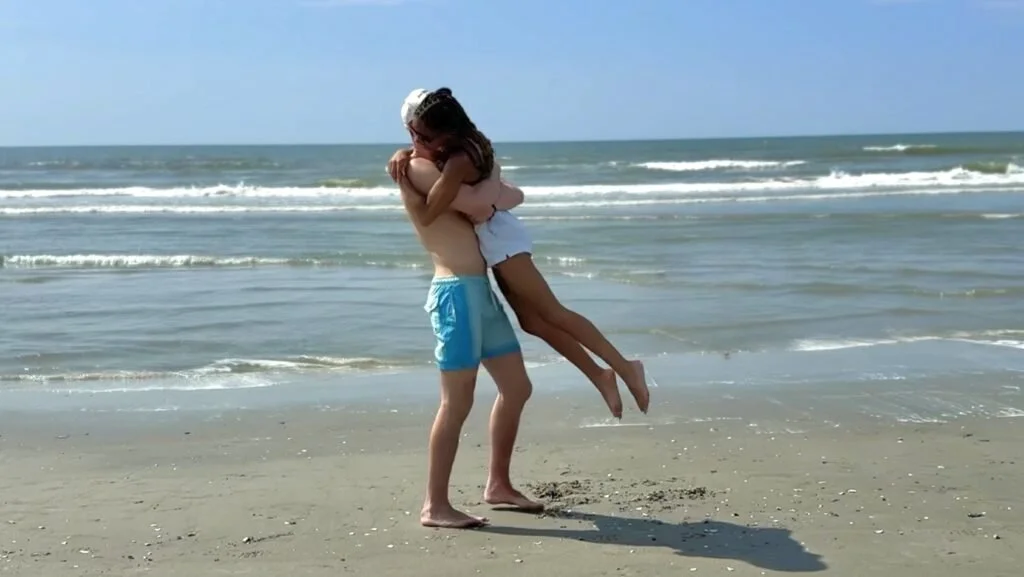
Caylah Pearson didn’t expect to find true love on Hinge. Like many college students, she downloaded the app out of curiosity, peer pressure from friends, and a sense that everyone else seemed to be coupling up. Falling in love through a screen was not what she expected, especially with someone from the other side of the world.
Her story is deeply personal, but it’s also familiar. Online dating is now the main way people connect; it’s no longer just a backup plan. We meet, date, and build trust. Caylah’s experience reflects a cultural shift in the 21st century.
From Swiping to Soulmates
Online dating has exploded over the past 20 years. Back in 1995, the percentage of U.S. couples meeting online was very small: only 2%. By 2017, that number jumped to 39% and continues to rise. Today, meeting a significant other through an app is common. Indeed, online dating is now typical.
According to a 2023 Pew Research Center study, nearly 50% of adults under 30 reported having used a dating app. The study states that one in five users reported their relationship began with a match.
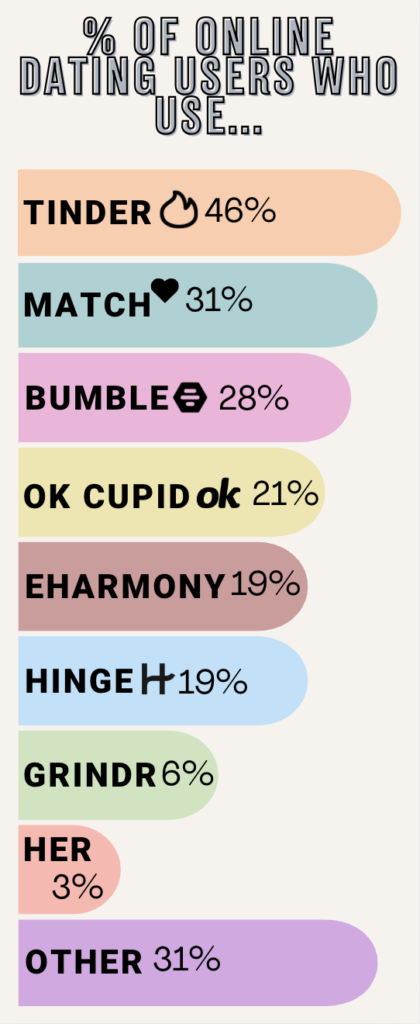
Not all apps are created equal. Tinder sees the most usage among young adults, followed by Match and Bumble. While each has its own vibe and algorithm, they all reflect the same desire: to connect.

The Match Timeline
How fast do app conversations turn into dates?
Caylah felt a quick yet special connection. “We FaceTimed for six hours the first time,” she says. “He had good energy, so I was like, I’m going to go with that.”
According to Hinge’s internal data, most users exchange phone numbers within just 20 messages. A Stanford study found the average time from match to meeting is between five and 10 days.
Not all connections go offline, though. For some, distance becomes a defining factor.
Modern Dating = Modern Challenges
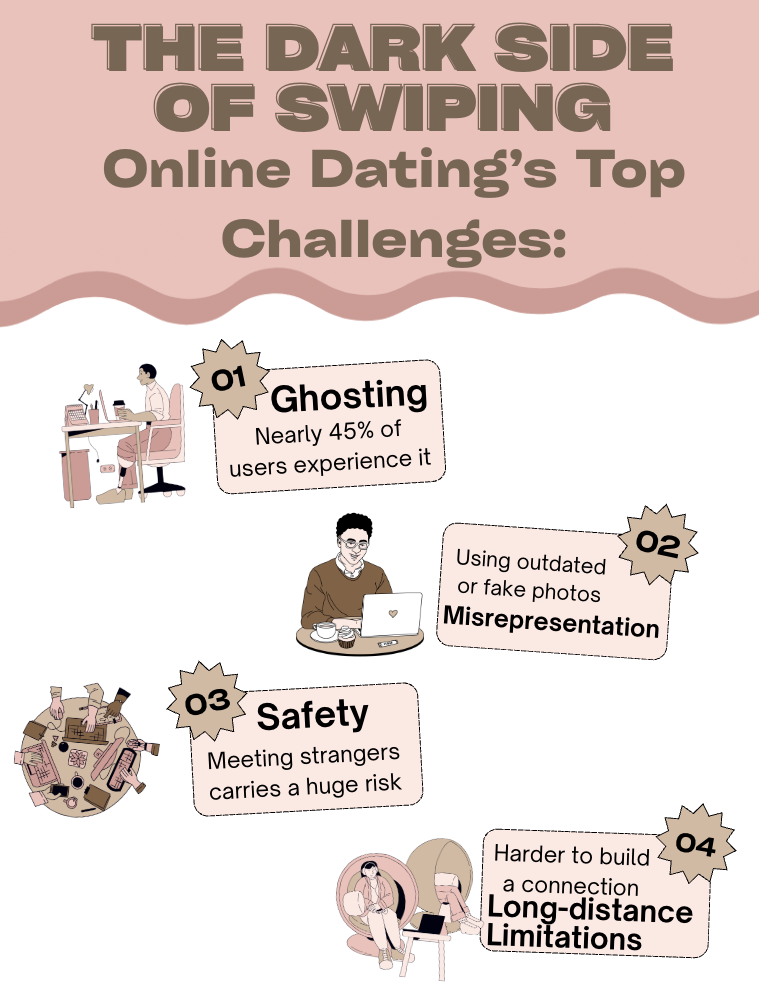
Caylah’s boyfriend didn’t live in the same country. They had to build trust virtually for months before meeting in person.
“It was scary,” she says. “Anything could go wrong. He could just stop texting me.”
A 2022 Pew Research Center survey found that 30% of women and 38% of men reported being deceived on dating apps in some form.
This emotional vulnerability is the price of connection in the digital age.
Yet for many like Caylah, the risk is worth it, because sometimes, even across oceans and algorithms, love still finds a way.
How We Talk in the Early Stages
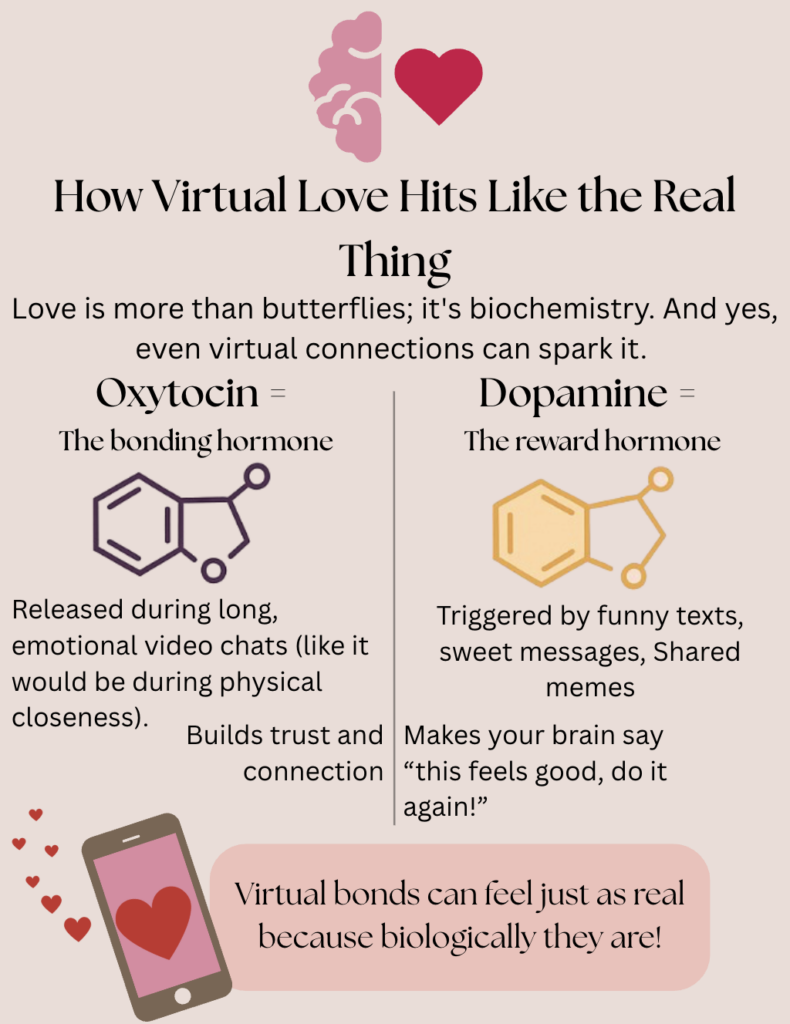
Caylah and her partner spent weeks having long phone and video conversations before ever sharing a meal.
“We didn’t just talk—we built a rhythm, even though we were far apart.”
Texting remains one of the most common forms of early communication, but voice notes and video chats are becoming more popular, especially for long-distance matches. People use these tools to deepen connections before meeting in person.
“We stay emotionally connected by just making sure that we’re constantly reassuring each other,” Caylah says.
Is Online Love Built on Trust?
“You have to go in with both hope and caution,” Caylah says. “But I wouldn’t trade this experience for anything.”
Trust is a major reason people hesitate to use dating apps. Can someone really be who they say they are?
Relationships in the past often started through school, mutual friends, or shared communities: routes that naturally fostered trust. Online, you rely on photos, conversations, and bios to judge authenticity.
Still, people are learning how to trust in new ways. According to a 2022 study, 54% of all adults believe online relationships are as successful as in-person ones.
“I think it’s really important to put yourself out there in any way that you can and just be willing to go with whatever will happen,” Caylah says. “Love is just something that can come out of nowhere.”
Love, Literally
Caylah’s story is one of vulnerability and risk. It highlights a real connection. She learned how to trust someone thousands of miles away, how to communicate openly, how to navigate all the awkwardness of digital love, and more. She didn’t just fall for a guy.
And she’s not alone.
As dating apps continue to shape how people meet, stories like hers prove that modern love, backed by data and driven by emotion, is just as valid and just as beautiful as it’s always been.
A closer Look at Caylah’s Story:

Sources:
https://www.pewresearch.org/short-reads/2023/02/02/key-findings-about-online-dating-in-the-u-s/verywellmind.com+9pewresearch.org+9reddit.com+9
https://www.pewresearch.org/internet/2020/02/06/the-virtues-and-downsides-of-online-dating/ pewresearch.org
https://expandedramblings.com/index.php/tinder-statistics/pewresearch.org+3expandedramblings.com+3en.wikipedia.org+3
https://news.stanford.edu/stories/2019/08/online-dating-popular-way-u-s-couples-meetbrides.com+6news.stanford.edu+6verywellmind.com+6
https://www.theguardian.com/wellness/article/2024/jul/10/gen-z-digital-dating-era theguardian.com
https://apnews.com/article/27e84e1e14fbe092cb9ff69e41a47ffc apnews.com
https://www.verywellmind.com/how-online-dating-affects-mental-health-and-behavior-5114576